Jentic Tech Talk
The newsletter for teams building AI that actually ships. Covering APIs, AI agents, open standards, and enterprise architecture.
10,000+ APIs Benchmarked for AI-Readiness
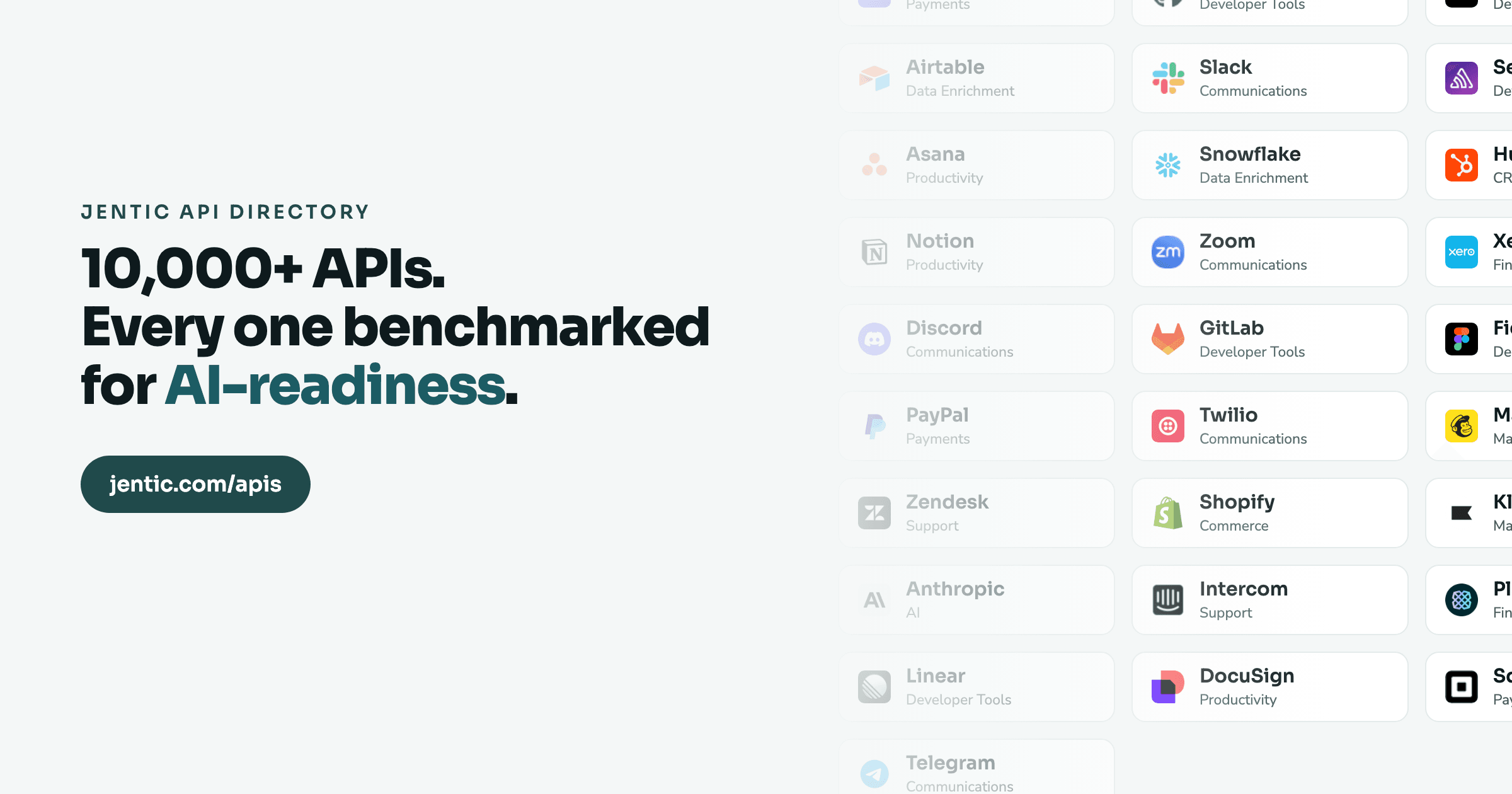
The Jentic API directory now renders an AI-Readiness scorecard for every API it lists: over 10,000 public APIs, each scored across the six dimensions of the Jentic API AI-Readiness Framework. You can see where an API sits before you build on it, and which dimensions are holding it back.

AI Didn’t Retire the Contract. It Made the Contract Matter More.
Kin Lane has been writing about APIs for fifteen years, and his latest piece on API Evangelist addresses the question showing up in every architecture conversation in 2026: if you can tell Claude to make you an API and it does, why do you still need API standards, and the rest of the machine-readable stack?
We already ran this experiment years ago. SOAP and WSDL let tooling generate the contract and the code together, and it worked right up until the contract became so entangled with the tooling that produced it that you no longer owned the contract — the tooling did. An AI-generated API whose only real description lives inside the prompt and the model that produced it is the same mistake in a new interface.
The deterministic artifacts — OpenAPI, AsyncAPI, JSON Schema, Arazzo, Overlays, Spectral rules — are not ceremony you skip because the model is smart. They are what turns a generated API into something you can diff, version, lint, govern, and move independently of whatever produced it. Kin's framing is precise:
The intelligence goes into producing the contract. The contract, once produced, is a boring deterministic object, and boring and deterministic is exactly what you want the thing your business depends on to be.
AI raised the stakes for good API contracts, making them more important than ever, especially if you care about IP and sovereignty.
10 Tips for Preparing APIs for Agentic Access
Nordic APIs published a practical rundown on what it takes to make an API agent-ready, drawing on agentic scorecards and practitioner experience with real deployments.
Three points stand out. Design endpoints around intent rather than CRUD operations so agents don't have to chain multiple calls to complete a task. Return structured error objects with enough context for agents to recover autonomously. Treat observability as a first-class requirement — a single agent can generate hundreds of API calls across multiple systems in patterns that look nothing like human traffic.
The piece also covers authentication scoping, rate limiting strategies for bursty agent traffic, and the role of machine-readable workflow definitions for multi-step processes. The Jentic API AI-Readiness Scorecard is referenced directly as a tool for assessing where your APIs stand across these dimensions.
— CONFERENCES & EVENTS
Watch the latest webinars on demand, or join us at our latest events
Have an idea for a webinar topic you’d like to see us cover? Send us an email.
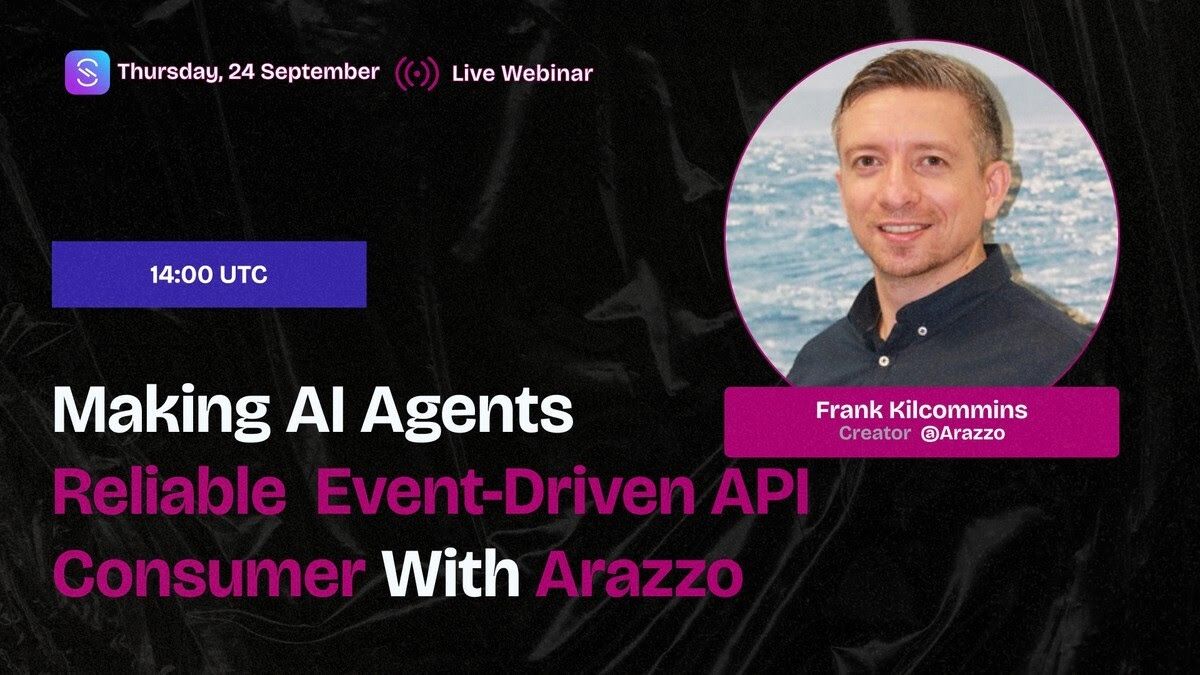
Making AI Agents Reliable Event-Driven API Consumers with Arazzo
An online session on Thursday, September 24th at 14:00 UTC, Frank joins this event hosted by Azeez Elegbede, on the AsyncAPI support that landed in Arazzo 1.1. You can now point to AsyncAPI v3 documents alongside OpenAPI ones, giving your agents real knowledge of how your system actually behaves.
Instead of guessing from documentation, agents execute workflows that say explicitly when to publish a message, when to listen for a response, and how to correlate an async reply. That is the difference between an unpredictable integration and a dependable one.
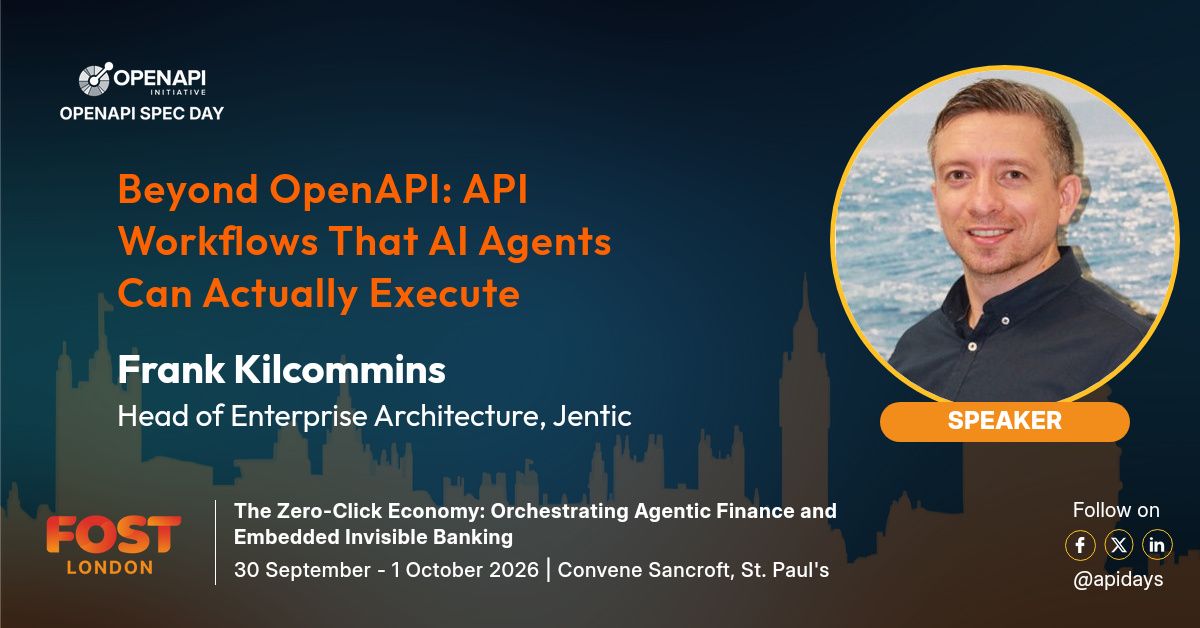
apidays London: When the Primary API Consumer Is an Agent
September 30th and October 1st at Convene Sancroft, St. Paul’s, with the OpenAPI Initiative Track on the 1st. The theme is the Zero-Click Economy: the primary consumer of a bank’s API in 2026 is an agent with a mandate, not a human with a mobile app.
My talk is “Beyond OpenAPI: API Workflows That AI Agents Can Actually Execute”, 9:30am on the 1st in Doddington Forum 2. Agents call single endpoints well enough; multi-step workflows are where they fall apart, because OpenAPI says nothing about sequencing or how state moves across calls. Arazzo gives them workflows to execute rather than infer.
I have some complimentary tickets for the community.
— What's New in Jentic
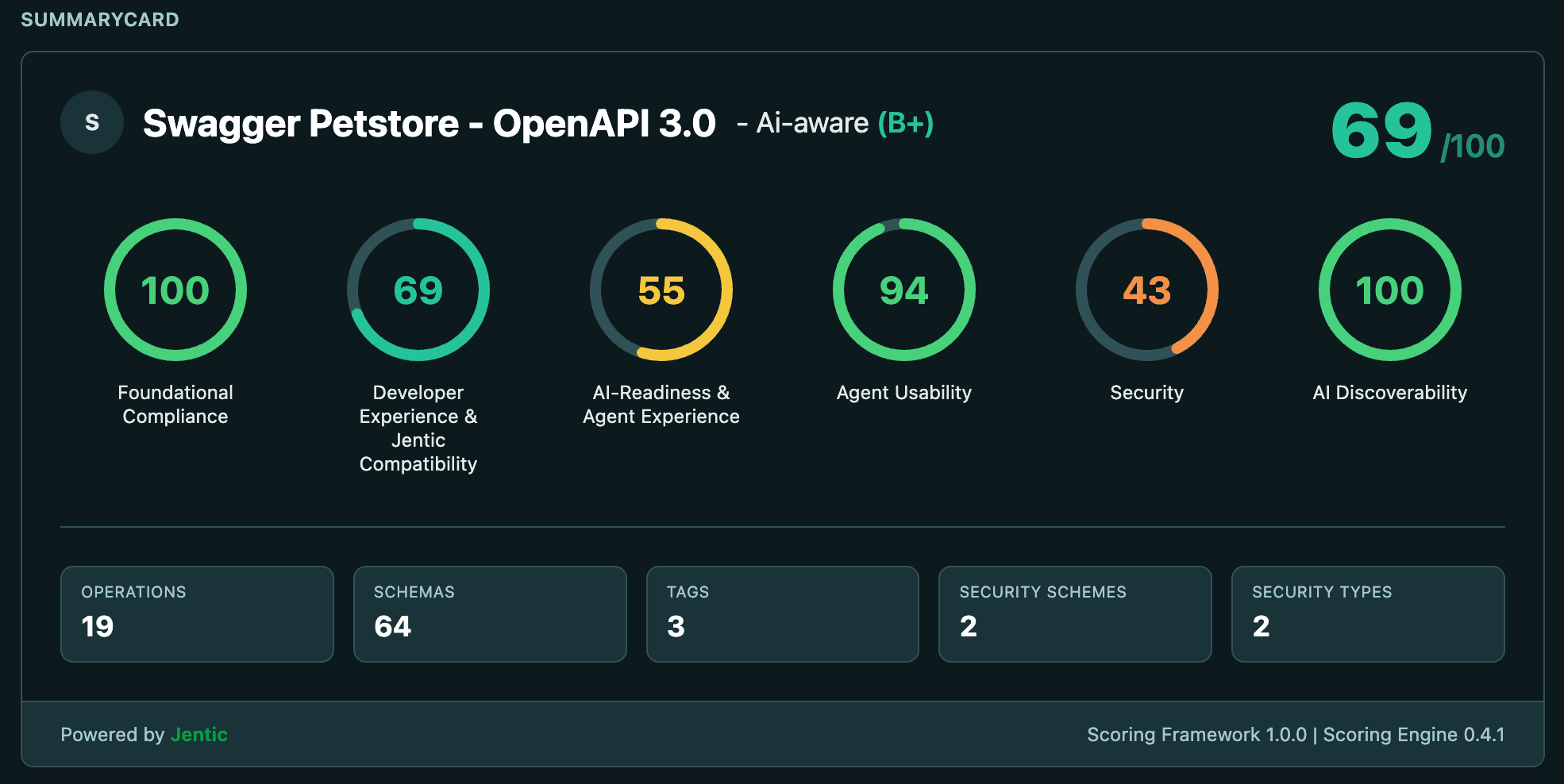
AI-Readiness Scorecard CLI has a new "Convert" command
Two updates shipped to the open-source Jentic API AI-Readiness Scorecard tooling.
The first is a new convert command. Once you have a saved scorecard result, you no longer need to re-run the scorer to get a different format. A single JSON result file can be reformatted on demand:
jentic-api-scorecard convert report.json --format html -o report.html
The command covers four output targets: HTML for publishing and management updates, SARIF for feeding results into security dashboards and code scanning workflows, Markdown and JSON for agent context and downstream automation. In a CI/CD pipeline, the scorer runs once and produces a result artifact. From that point, the artifact travels into a PR comment, a security dashboard, a developer portal, or an LLM context window without re-scoring. The format follows the consumer, not the other way around.
The second update is in @jentic/api-scorecard-formatter-html, which now exports individual components alongside the full report renderer. The available components are SummaryCard, DimensionCard, DiagnosticsSection, CircularProgress, GradeBadge, and ApiMetadataCard. Teams embedding scorecard results into their own developer portals or agent marketplaces can compose exactly what they need rather than taking on the full report UI. One team needs just the grade and dimension breakdown. Another needs the full diagnostics panel. Both are possible without forking the renderer.
Both packages are on npm, and our first consumer is our own public AI-ready APIs directory!